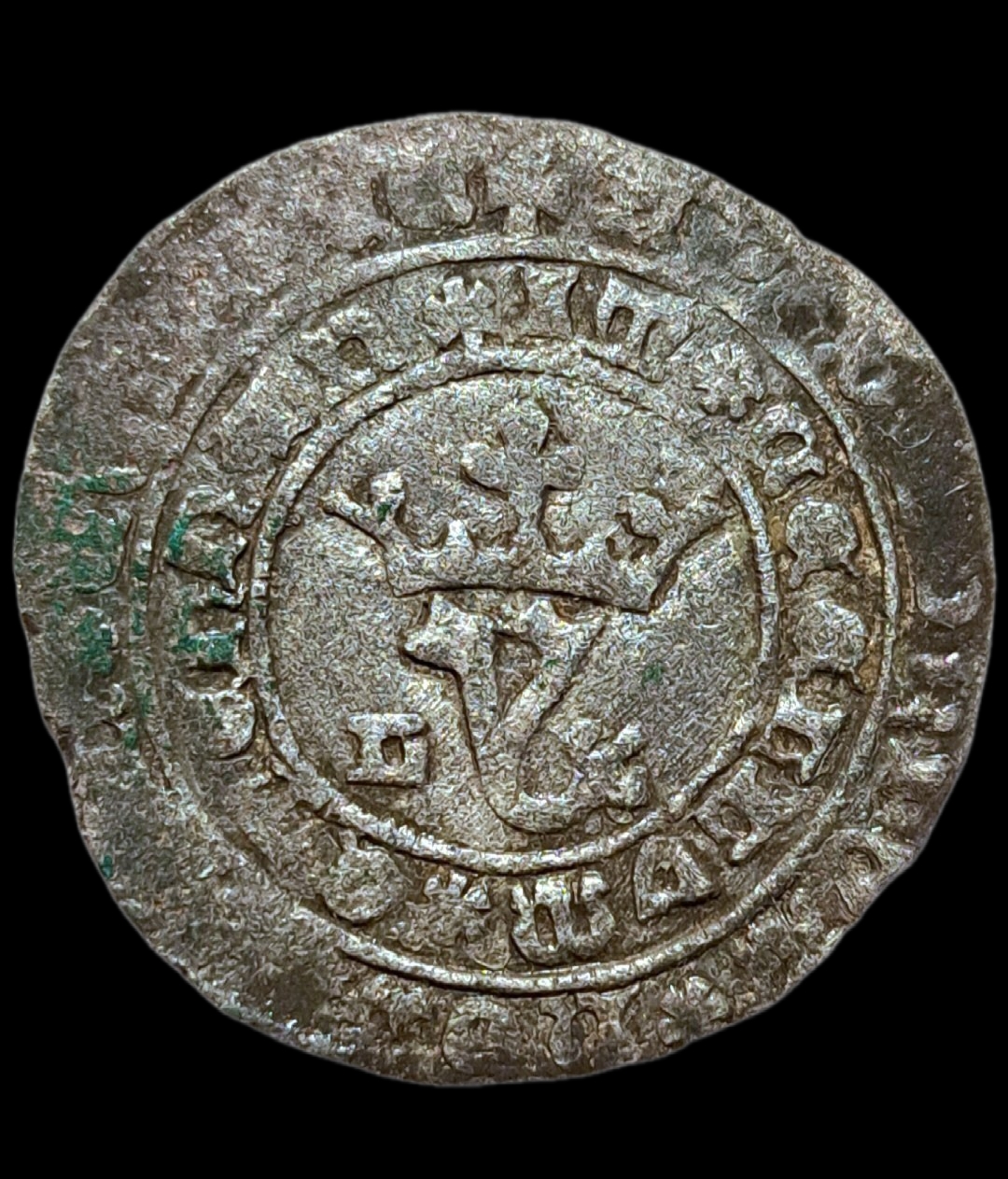
Reverse
Reverso
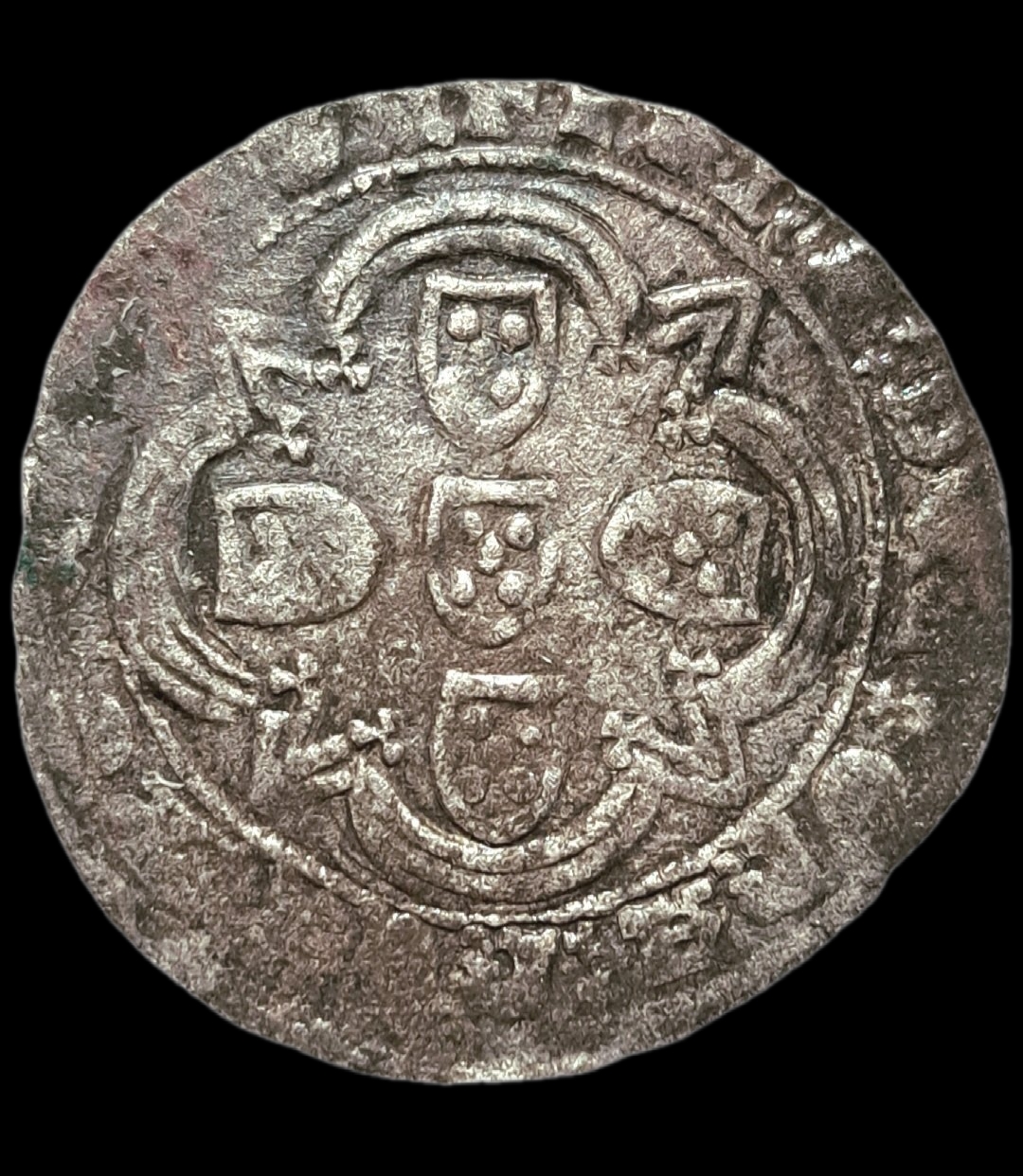
Obverse
Anverso
A Real Branco issued during the long reign of King João I, founder of the House of Avis and one of the most influential figures in Portuguese medieval history. The coin displays the heraldic elements characteristic of the period — the royal arms of Portugal with the quartered shield arrangement that would define Portuguese coinage for over a century. Despite circulation wear consistent with its age of over six hundred years, several details of the original design and surrounding legend remain identifiable.
Real Brancos were among the principal denominations of the Portuguese monetary system during the late fourteenth and early fifteenth centuries. They circulated during a period of political consolidation and growing commercial activity following the dynastic crisis of 1383–1385 and the foundation of the Avis dynasty. The billon alloy — a mixture of silver and copper — gives the coin its characteristic appearance and the greenish patina visible on the surface.
Um Real Branco emitido durante o longo reinado de D. João I, fundador da Dinastia de Avis e uma das figuras mais influentes da história medieval portuguesa. A moeda apresenta os elementos heráldicos característicos do período — as armas reais de Portugal com a disposição quartejada do escudo que definiria a moedagem portuguesa durante mais de um século. Apesar do desgaste de circulação consistente com a sua antiguidade de mais de seiscentos anos, vários detalhes do desenho original e da legenda circundante permanecem identificáveis.
Os Reais Brancos constituíram uma das principais denominações do sistema monetário português durante o final do século XIV e início do século XV. Circularam durante um período de consolidação política e crescente actividade comercial após a crise dinástica de 1383–1385 e a fundação da Dinastia de Avis. A liga de bolhão — mistura de prata e cobre — confere à moeda a sua aparência característica e a pátina esverdeada visível na superfície.
João I (1357–1433) ruled Portugal between 1385 and 1433 following his acclamation at the Cortes of Coimbra and the decisive Portuguese victory at the Battle of Aljubarrota (1385), which secured Portuguese independence from Castile. His reign established the House of Avis — the dynasty that would preside over Portugal's Age of Discovery — and is one of the most consequential in Portuguese history.
Under João I, Portugal consolidated its institutions, expanded its commercial networks and took its first decisive step towards overseas expansion with the conquest of Ceuta in 1415 — generally regarded as the opening act of the Portuguese Age of Discovery. This coin circulated in a Portugal that was already beginning to look outward, in the same decades that saw the birth of Prince Henry the Navigator and the earliest Atlantic voyages.
D. João I (1357–1433) reinou em Portugal entre 1385 e 1433, após a sua aclamação nas Cortes de Coimbra e a decisiva vitória portuguesa na Batalha de Aljubarrota (1385), que assegurou a independência portuguesa face a Castela. O seu reinado fundou a Dinastia de Avis — a dinastia que presidiu à Era dos Descobrimentos portugueses — e é um dos mais consequentes da história portuguesa.
Sob D. João I, Portugal consolidou as suas instituições, expandiu as suas redes comerciais e deu o primeiro passo decisivo para a expansão ultramarina com a conquista de Ceuta em 1415 — geralmente considerada o acto inaugural da Era dos Descobrimentos portugueses. Esta moeda circulou num Portugal que já começava a olhar para o exterior, nas mesmas décadas que viram o nascimento do Infante D. Henrique e as primeiras viagens atlânticas.