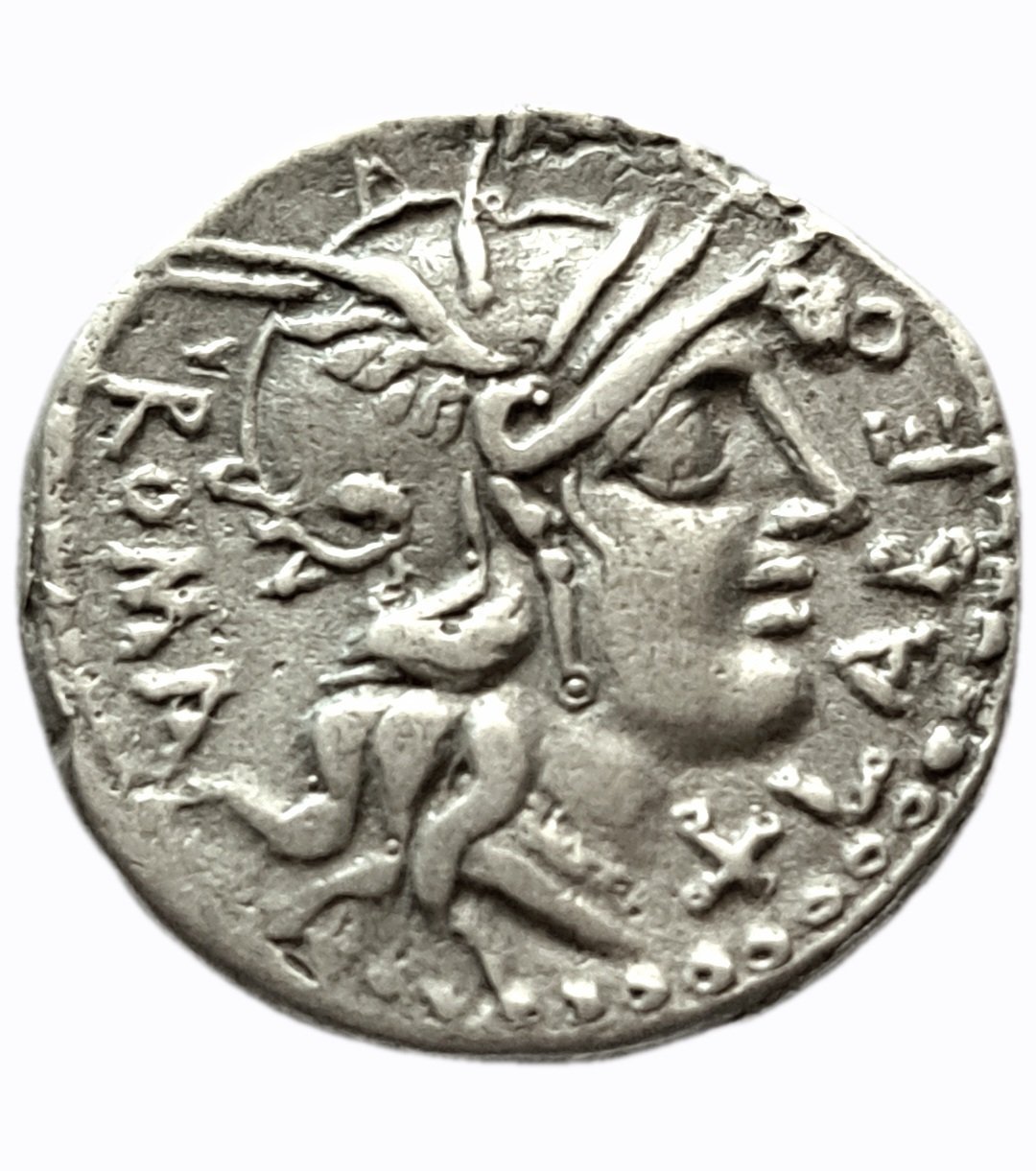
Obverse
Anverso
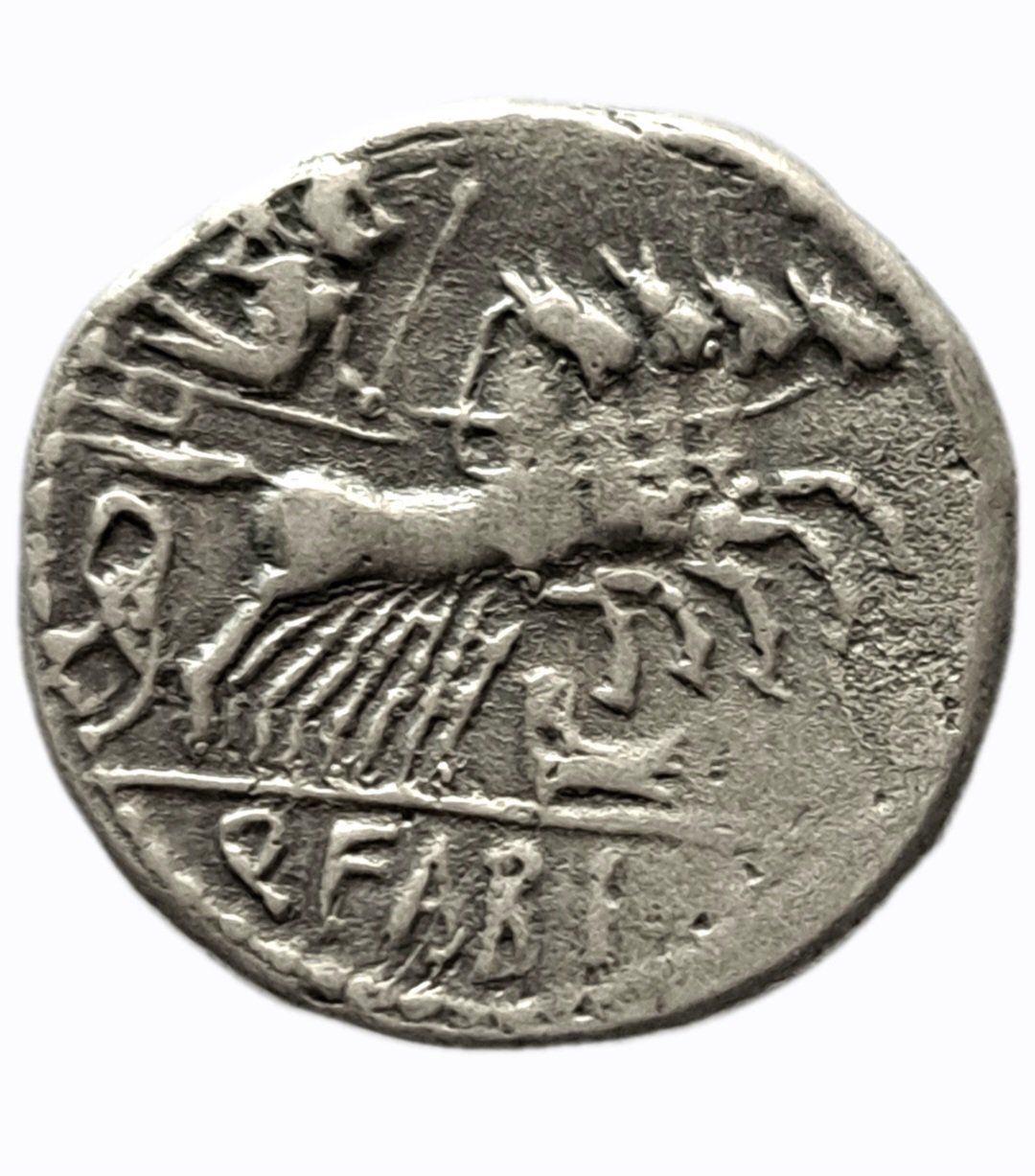
Reverse
Reverso
A silver denarius of the Roman Republic struck in 109 BC by the moneyer Quintus Fabius Labeo, probably corresponding to Crawford reference 273/1. The coin weighs 2.69 g, below the theoretical standard for the period, possibly due to wear, clipping or metal loss. The obverse bears the helmeted head of Roma — the personification of the city — which was the canonical type for Republican denarii from their introduction in 211 BC. The reverse shows Jupiter in a quadriga, one of the most powerful images in Roman civic religion, evoking divine protection, military triumph, and the authority of the state.
The coin shows good definition on both sides. The obverse legend LABEO is partially visible, as is the value mark X and the ROMA inscription. The reverse quadriga retains good detail on the horses and chariot. The coin displays an aged surface patina; authenticity is based on acquisition records and numismatic attribution rather than patina alone.
Um denário de prata da República Romana cunhado em 109 a.C. pelo monetário Quintus Fabius Labeo, correspondendo quase certamente à referência Crawford 273/1. A moeda pesa 2,69 g, abaixo do padrão teórico para o período, possivelmente devido a desgaste, corte ou perda de metal. O anverso apresenta a cabeça capacetada de Roma — a personificação da cidade — que era o tipo canónico para os denários republicanos desde a sua introdução em 211 a.C. O reverso mostra Júpiter numa quadriga, uma das imagens mais poderosas da religião cívica romana, evocando protecção divina, triunfo militar e autoridade do Estado.
A moeda apresenta boa definição em ambos os lados. A legenda do anverso LABEO é parcialmente visível, assim como a marca de valor X e a inscrição ROMA. A quadriga do reverso conserva bom detalhe nos cavalos e carro. Pátina natural consistente com aproximadamente 2.130 anos de antiguidade.
This coin was struck during the final decades of the Roman Republic, a period marked by the military reforms of Gaius Marius and the growing political tensions that would culminate in the civil wars of the 1st century BC. It was minted approximately fifty years before the assassination of Julius Caesar and nearly a century before the rise of Emperor Augustus.
The Fabia family was one of the oldest and most prestigious patrician gentes of Rome, with a long tradition of magistracies, military commands, and political influence. As was customary in the Republic, moneyers used coinage to promote the memory and prestige of their lineage. The choice of Jupiter in a quadriga on the reverse may allude to triumphal and civic imagery associated with Roman public life — it directly invokes the triumphal imagery associated with the gens Fabia's long history of military service to Rome.
Esta moeda foi cunhada durante as últimas décadas da República Romana, um período marcado pelas reformas militares de Caio Mário e pelas crescentes tensões políticas que culminariam nas guerras civis do século I a.C. Foi emitida cerca de cinquenta anos antes do assassínio de Júlio César e quase um século antes da ascensão do Imperador Augusto.
A família Fabia era uma das gentes patrícias mais antigas e prestigiadas de Roma, com uma longa tradição de magistraturas, comandos militares e influência política. Como era habitual na República, os monetários utilizavam as moedas para promover a memória e o prestígio da sua linhagem. A escolha de Júpiter numa quadriga no reverso não é acidental — evoca directamente a imagética triunfal associada à longa história de serviço militar da gens Fabia a Roma.