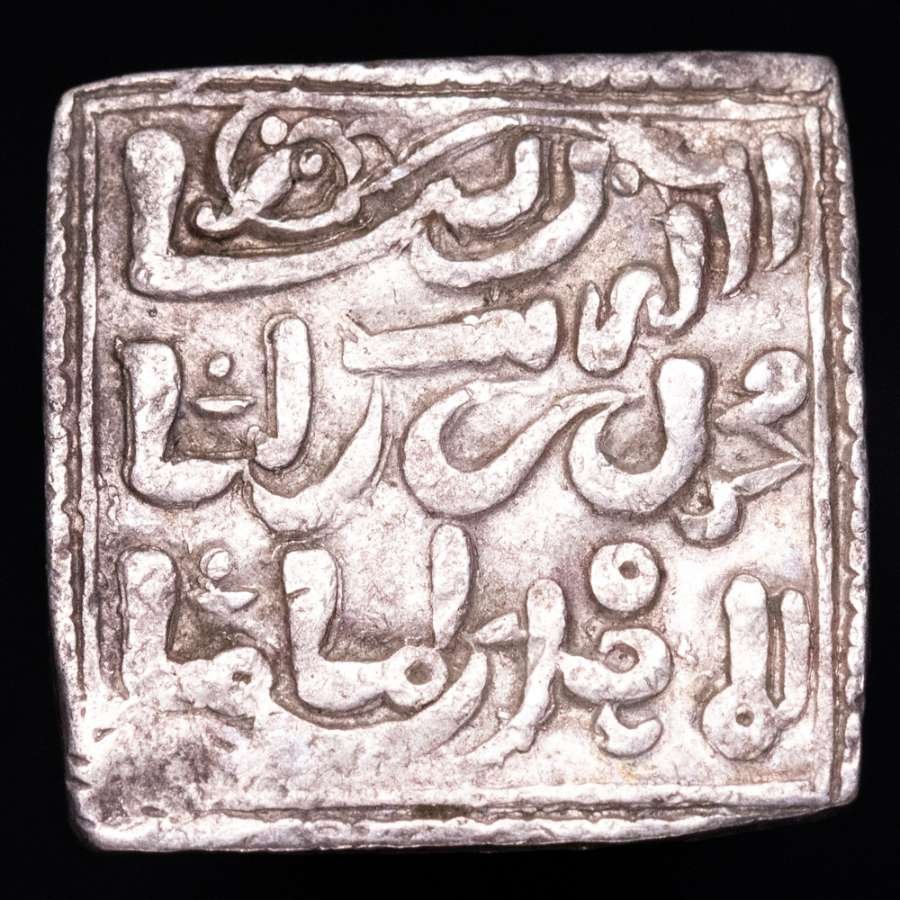
Side A
Lado A
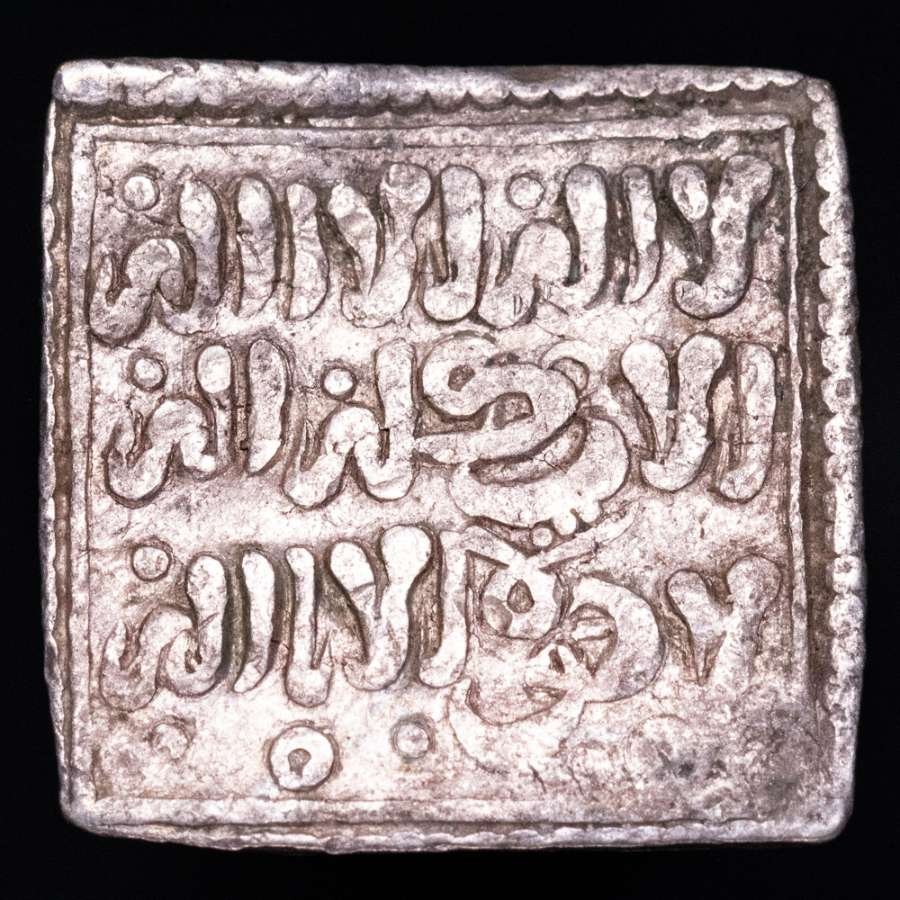
Side B
Lado B
A silver square dirham belonging to the group of Christian imitative issues inspired by the coinage of the Almohad Empire. The example reproduces the square format and epigraphic style characteristic of Almohad dirhams, including Arabic inscriptions arranged in square fields framed by linear borders. As with other issues of this group, the coin adapts Islamic monetary models that were widely used in western Mediterranean trade at the time.
The specific minting workshop remains uncertain. Examples of this type are generally associated with workshops located in Christian-held territories of the Iberian Peninsula, though other production areas have also been proposed in southern France and, occasionally, in regions of northern Italy. No single attribution is firmly established in the published literature, and this catalogue entry does not adopt one.
Um dirham quadrado de prata pertencente ao grupo das emissões cristãs imitativas inspiradas na cunhagem do Império Almóada. O exemplar reproduz o formato quadrado e o estilo epigráfico característicos dos dirhams almóadas, incluindo inscrições árabes dispostas em campos quadrados enquadrados por margens lineares. Tal como outras emissões deste grupo, a moeda adapta modelos monetários islâmicos então amplamente utilizados no comércio do Mediterrâneo ocidental.
A atribuição específica da oficina de cunhagem permanece incerta. Exemplares deste tipo são geralmente associados a oficinas localizadas em territórios cristãos da Península Ibérica, tendo sido também propostas outras áreas de produção no sul de França e, ocasionalmente, em regiões do norte de Itália. Não existe uma atribuição única firmemente estabelecida na literatura publicada, e esta entrada de catálogo não adopta nenhuma.
During the 12th and 13th centuries, coins of Islamic tradition circulated widely on the Iberian Peninsula and within the trade networks of the western Mediterranean. In various regions under Christian rule, issues were produced that imitated Almohad dirhams, preserving formal and epigraphic features similar to their Islamic prototypes. These coins are evidence of the economic and cultural interactions between Christian and Islamic territories in medieval Europe.
Coins of this kind are sometimes referred to in Spanish-language numismatic literature as "millarés". Their precise issuing authority is rarely established with confidence, and most published catalogues record them as anonymous imitative issues rather than attributing them to a specific ruler or mint.
Durante os séculos XII e XIII, moedas de tradição islâmica circularam amplamente na Península Ibérica e nas redes comerciais do Mediterrâneo ocidental. Em diversas regiões sob domínio cristão foram produzidas emissões que imitavam os dirhams almóadas, preservando características formais e epigráficas semelhantes às dos protótipos islâmicos. Estas moedas constituem testemunhos das interações económicas e culturais entre os territórios cristãos e islâmicos da Europa medieval.
Moedas deste tipo são por vezes referidas na literatura numismática de língua espanhola como "millarés". A sua autoridade emissora precisa raramente é estabelecida com confiança, e a maioria dos catálogos publicados regista-as como emissões imitativas anónimas, em vez de as atribuir a um governante ou ceca específicos.
The example clearly preserves the original square format and most of the epigraphic elements. The inscriptions remain largely visible, despite wear consistent with circulation and natural ageing of the surface.
O exemplar preserva com clareza o formato quadrado original e a maior parte dos elementos epigráficos. As inscrições permanecem amplamente visíveis, apesar do desgaste compatível com circulação e envelhecimento natural da superfície.