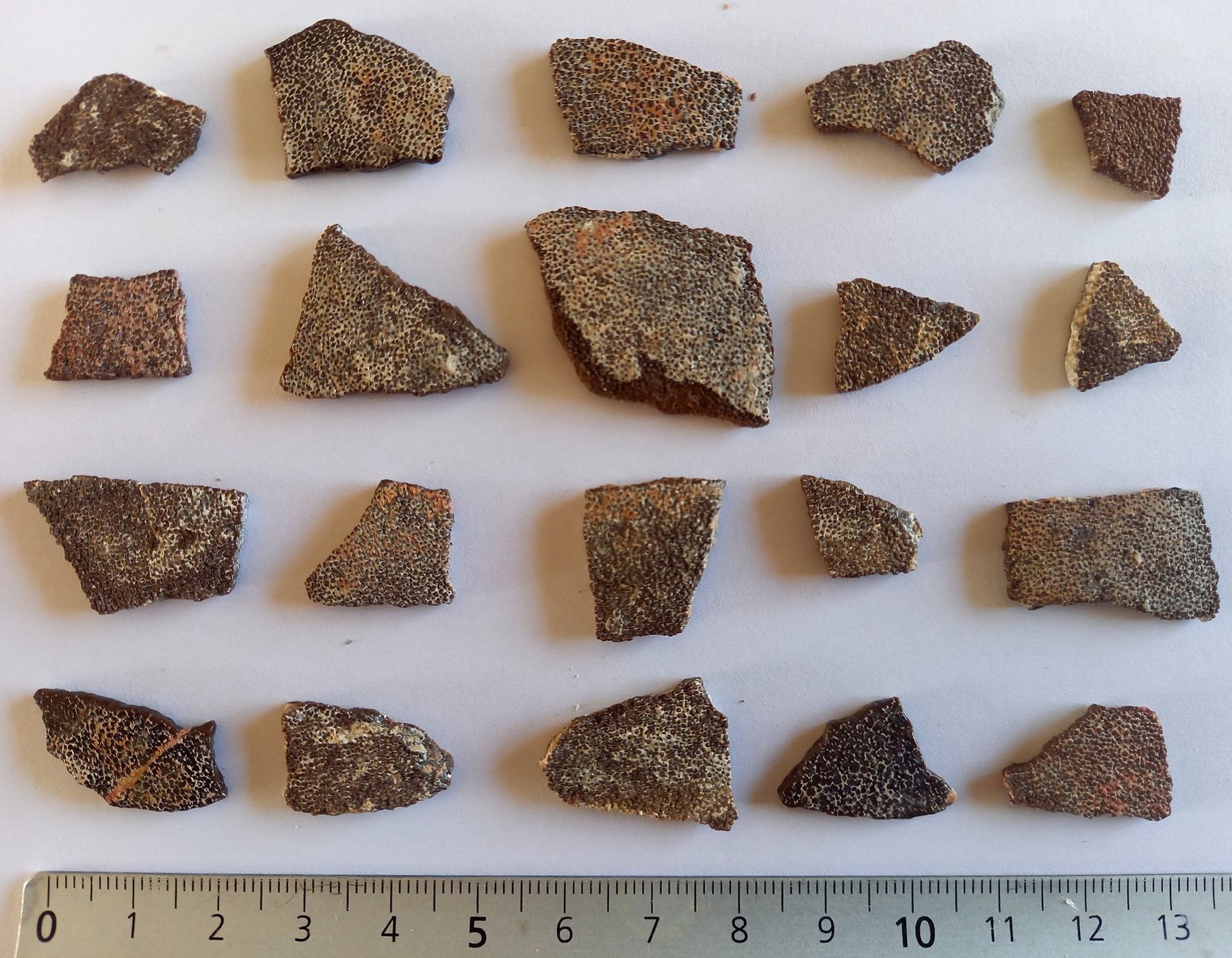
A collection of 20 fossilised dinosaur egg shell fragments belonging to the oospecies Megaloolithus siruguei, preserved in natural condition without restoration. The fragments range in size from approximately 1 to 7 cm and display the characteristic surface texture of this species — small rounded tubercles or bulges covering the outer surface of the shell. These distinctive protuberances are not merely decorative: they served a vital biological function, creating tiny air pockets between the shell and the surrounding sediment that allowed oxygen to reach the developing embryo.
The fragments show two distinct coloration types depending on the geochemistry of the sediment in which they fossilised — some are deep reddish-brown, others near black. Both are represented in this lot, making it an instructive study collection. The texture and thickness of the shell are clearly visible on the broken edges.
Uma colecção de 20 fragmentos de casca de ovo de dinossauro fossilizados pertencentes à ooespécie Megaloolithus siruguei, preservados em estado natural sem restauro. Os fragmentos variam em tamanho entre aproximadamente 1 e 7 cm e apresentam a textura superficial característica desta espécie — pequenos tubérculos ou saliências arredondadas que cobrem a superfície exterior da casca. Estas protuberâncias distintivas não são meramente decorativas: serviam uma função biológica vital, criando pequenas bolsas de ar entre a casca e o sedimento circundante que permitiam ao oxigénio atingir o embrião em desenvolvimento.
Os fragmentos mostram dois tipos de coloração distintos dependendo da geoquímica do sedimento em que se fossilizaram — alguns são castanho-avermelhado intenso, outros quase negros. Ambos estão representados neste lote, tornando-o uma colecção de estudo instrutiva. A textura e espessura da casca são claramente visíveis nas arestas partidas.
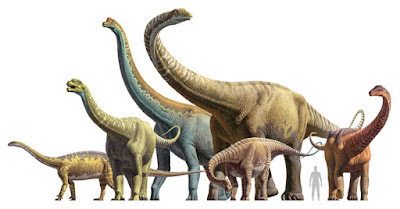
Megaloolithus is an oogenus — a classification system used for fossil eggs that cannot always be assigned to a specific dinosaur genus. Scientific research suggests that Megaloolithus eggs were laid by titanosaurian sauropods, the enormous long-necked dinosaurs that were among the last surviving giants before the mass extinction 66 million years ago. These dinosaurs lived in what is now southern France during the Maastrichtian and Campanian stages of the Late Cretaceous.
The south of France — particularly the Aix-en-Provence basin and the Languedoc region — is one of Europe's richest sites for Late Cretaceous dinosaur egg fossils. Titanosaur nesting sites have been identified across this area, where females returned season after season to lay clutches of eggs in shallow depressions. These fragments represent the last generation of dinosaurs before the Chicxulub impact event ended the Mesozoic Era.
Megaloolithus é um oogenus — um sistema de classificação usado para ovos fósseis que nem sempre podem ser atribuídos a um género de dinossauro específico. A investigação científica sugere que os ovos de Megaloolithus foram postos por saurópodes titanossaurianos, os enormes dinossauros de pescoço longo que estavam entre os últimos gigantes sobreviventes antes da extinção em massa há 66 milhões de anos. Estes dinossauros viveram no que é hoje o sul de França durante os andares Maastrichtiano e Campaniano do Cretácico Superior.
O sul de França — particularmente a bacia de Aix-en-Provence e a região do Languedoc — é um dos locais mais ricos da Europa em fósseis de ovos de dinossauros do Cretácico Superior. Sítios de nidificação de titanossauros foram identificados em toda esta área, onde as fêmeas regressavam estação após estação para pôr ninhadas de ovos em depressões rasas. Estes fragmentos representam a última geração de dinossauros antes do impacto de Chicxulub que pôs fim à Era Mesozóica.
Scientific reconstruction of the main sauropod genera, shown to scale alongside a human figure. The egg shells in this collection were probably produced by titanosaur sauropods of comparable size to those illustrated here.
Reconstituição científica dos principais géneros de saurópodes, mostrados à escala ao lado de uma figura humana. As cascas de ovos desta colecção foram provavelmente produzidas por saurópodes titanossaurianos de tamanho comparável aos aqui ilustrados.