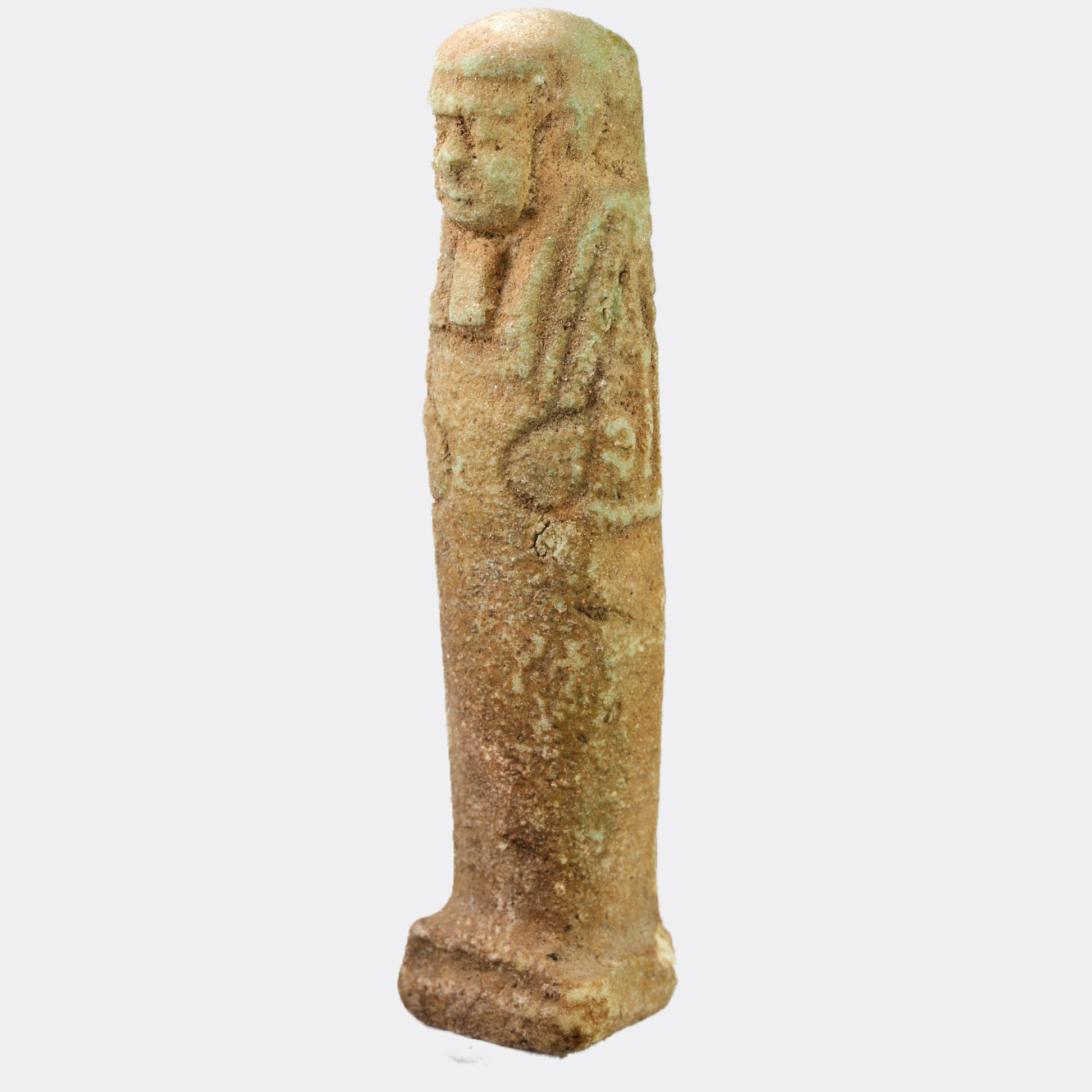
A small mummiform shabti figure in green-glazed faience, modelled in the round with modelled facial features, tripartite wig and arms at the body. The green glaze — strongest at the head and upper body — is well-preserved in the recesses despite overall surface weathering. Traces of the original light blue surface are also visible, indicating the figure was once covered with a blue glaze or pigment — a colour closely associated with rebirth and regeneration in ancient Egyptian funerary tradition.
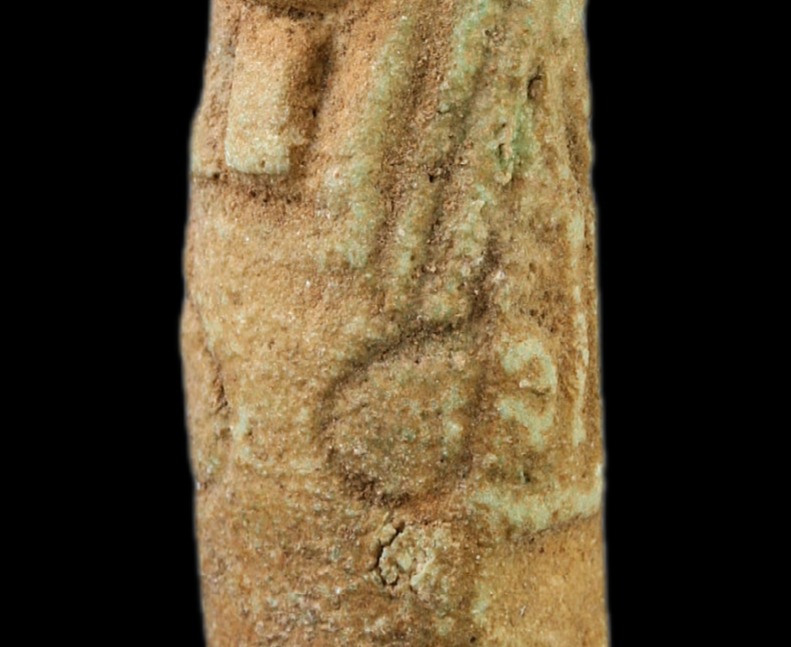
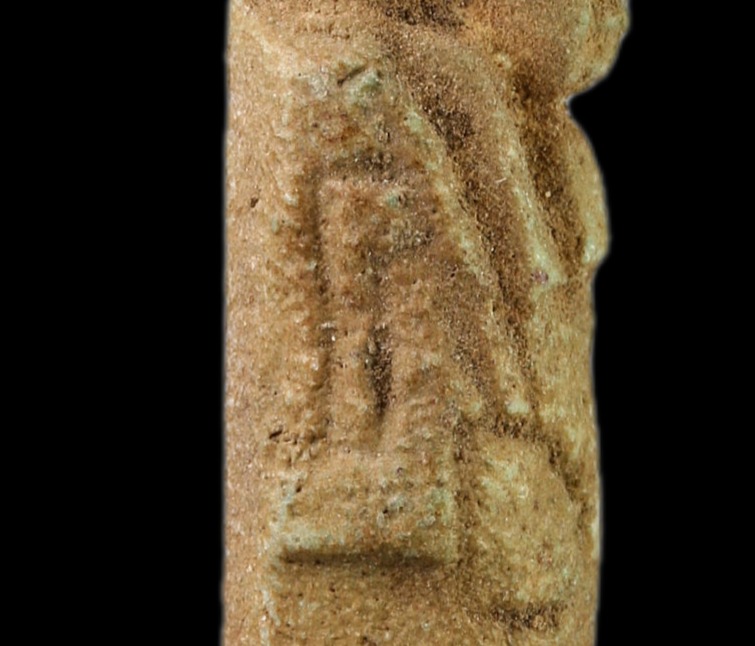
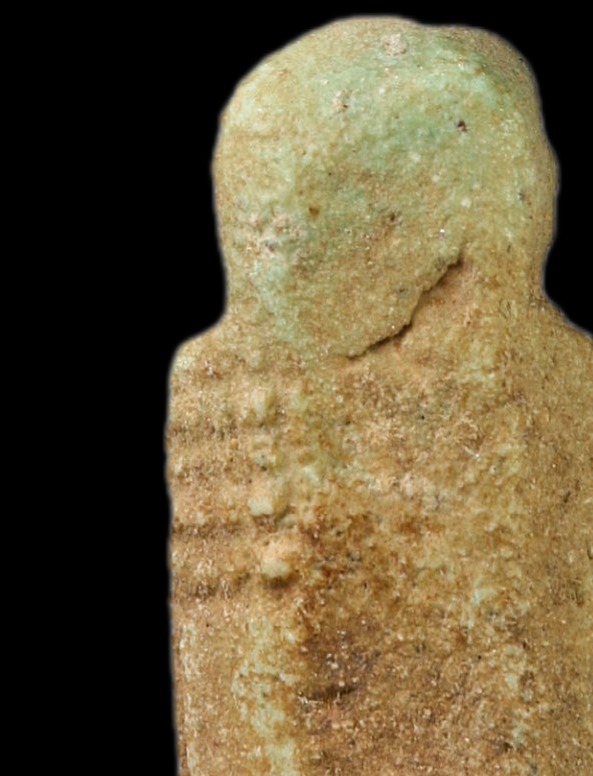
The figure is shown holding a hoe and a pick, the traditional agricultural implements associated with ushabti function. A small bag is visible on the left shoulder — a detail present on many shabtis of this type, representing the seed bag the figure would carry when performing agricultural labour in the afterlife. The simplified treatment of the hands and implements is consistent with mass-produced shabtis of the Late Period and early Ptolemaic Period.
Uma pequena figura shabti mumiforme em faiança de esmalte verde, modelada em bulto redondo com feições faciais moldadas, peruca tripartida e braços ao longo do corpo. O esmalte verde — mais intenso na cabeça e parte superior — está bem preservado nas reentrâncias apesar do desgaste superficial geral. Traços da superfície azul-clara original são também visíveis, indicando que a figura foi originalmente coberta com um esmalte ou pigmento azul — uma cor intimamente associada ao renascimento e regeneração na tradição funerária egípcia antiga.
A figura está representada a segurar uma enxada e uma picareta, os utensílios agrícolas tradicionais associados à função do shabti. Uma pequena bolsa é visível no ombro esquerdo — um detalhe presente em muitos shabtis deste tipo, representando o saco de sementes que a figura transportaria ao realizar trabalho agrícola na vida após a morte. O tratamento simplificado das mãos e utensílios é consistente com shabtis de produção em série do Período Tardio e início do Período Ptolomaico.
The following close-up photographs show the three key diagnostic elements identified by specialist assessment: the agricultural implements (hoe and pick) held by the figure, and the small bag on the left shoulder.
As fotografias de close-up seguintes mostram os três elementos diagnósticos chave identificados pela avaliação especializada: os utensílios agrícolas (enxada e picareta) que a figura segura, e a pequena bolsa no ombro esquerdo.
Shabti figures (also spelled ushabti or shawabti) were among the most important funerary objects in ancient Egypt, produced from the Middle Kingdom through the Ptolemaic period. Their name derives from the Egyptian word for "answerer" — when the deceased was called upon to perform agricultural labour in the afterlife, the shabti would answer in their place, reciting Chapter 6 of the Book of the Dead.
This ushabti is tentatively dated to approximately 300 BC, during the Late Period to early Ptolemaic Period, based on specialist assessment (see below). By this time, the tradition of shabti production had reached its peak in terms of quantity. Ushabtis were often produced in large quantities during this period, which means many examples display simplified modelling — particularly in the treatment of the arms and hands. The characteristic hand arrangement seen on this figure reflects this later mass-production tradition rather than a deviation from the standard ushabti form. The 4th century BC falls in the 30th Dynasty — the last native Egyptian dynasty — and the very early Ptolemaic period, a time of continued investment in traditional funerary practices.
As figuras shabti (também escritas ushabti ou shawabti) estavam entre os objectos funerários mais importantes do Egito antigo, produzidas desde o Médio Império até ao período ptolomaico. O seu nome deriva da palavra egípcia para "respondedor" — quando o falecido era chamado a realizar trabalho agrícola na vida após a morte, o shabti respondia em seu lugar, recitando o Capítulo 6 do Livro dos Mortos.
Este shabti é datado provisoriamente de aproximadamente 300 a.C., durante o Período Tardio ao início do Período Ptolomaico, com base numa avaliação especializada (ver abaixo). Nessa época, a tradição de produção de shabtis tinha atingido o seu auge em termos de quantidade. Os shabtis eram frequentemente produzidos em grande quantidade durante este período, o que significa que muitos exemplares apresentam modelação simplificada — particularmente no tratamento dos braços e mãos. O tratamento característico das mãos visível nesta figura reflecte esta tradição de produção em série tardia, e não um desvio da forma padrão do shabti. O século IV a.C. enquadra-se na 30.ª Dinastia — a última dinastia egípcia nativa — e no período ptolomaico muito inicial, uma época de investimento contínuo nas práticas funerárias tradicionais.
The identification of the agricultural implements and the dating to approximately 300 BC are based on specialist assessment. The simplified treatment of the hands is consistent with mass-produced ushabtis of the Late Period and early Ptolemaic Period.
A identificação dos utensílios agrícolas e a datação para aproximadamente 300 a.C. baseiam-se numa avaliação especializada. O tratamento simplificado das mãos é consistente com ushabtis de produção em série do Período Tardio e início do Período Ptolomaico.